


In the construction of urban infrastructure and industrial parks, the selection of manhole covers is far from a simple procurement decision; it is a critical technical consideration that impacts long-term safety, maintenance costs, and project reliability. The current market is primarily dominated by two main categories: Ductile Iron Manhole Covers and Composite Material Manhole Covers. Each is based on fundamentally different material science and engineering principles, resulting in distinct performance profiles and application scenarios. Understanding the intrinsic properties of these two materials is a prerequisite for making a scientific, economical, and lifecycle-appropriate choice.
Confronted with this critical decision, many project owners often become trapped in simplistic dilemmas of "strength" versus "corrosion resistance," or "traditional" versus "emerging." In reality, the optimal solution depends on a careful weighing of multiple variables within the specific application environment, including load requirements, chemical exposure, climatic conditions, anti-theft needs, and initial versus long-term costs. This article will provide an in-depth analysis of the core advantages and limitations of both cover types and offer a clear decision-making framework. Furthermore, we will emphasize how the industry-leading brand LuZhongBao achieves breakthrough optimizations in its core ductile iron product line through technological innovation while strategically developing high-performance composite products, thereby offering solutions that exceed ordinary market standards across both technological paths.
In-Depth Comparison of Core Material Properties
1. Mechanical Performance and Load-Bearing Capacity
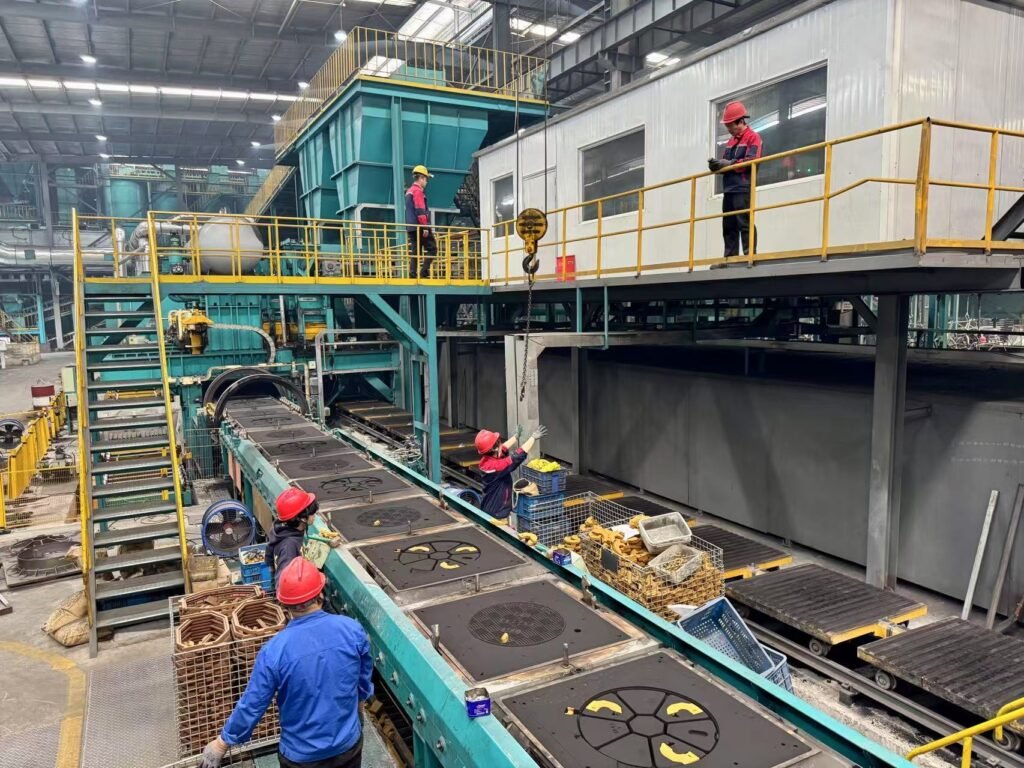
The core advantage of Ductile Iron Manhole Covers lies in their exceptional mechanical properties. The spheroidal graphite structure obtained through nodulization grants the material steel-like strength combined with excellent toughness, with tensile strength often exceeding 500 MPa. This results in outstanding compressive and impact resistance. Consequently, ductile iron covers, particularly LuZhongBao's products made from high-grade rare-earth ductile iron (QT600-3 and above), can easily meet the highest load-bearing standards (e.g., EN124 F900) and are widely used in extreme-duty areas such as ports, airport runways, and highways with frequent heavy truck traffic. Their load-bearing capacity is characterized by high reliability and predictability.
Composite Manhole Covers are typically made from a resin matrix mixed with glass fibers, fillers, etc. Their advantage is light weight, but their absolute strength and toughness are generally lower than high-quality ductile iron. Under high-intensity, high-frequency impact loads, they may be susceptible to creep or localized fatigue cracking. Their load-bearing capacity is more suited for medium-to-light duty scenarios like side roads, parks, and sidewalks with lower traffic volume.
2. Corrosion Resistance and Environmental Adaptability
This is the traditional main advantage touted for composite covers. Their material is inherently insensitive to electrochemical corrosion and, in theory, offers a longer service life in corrosive environments permeated with acids, alkalis, or salts, such as coastal areas, chemical plants, and wastewater treatment facilities.
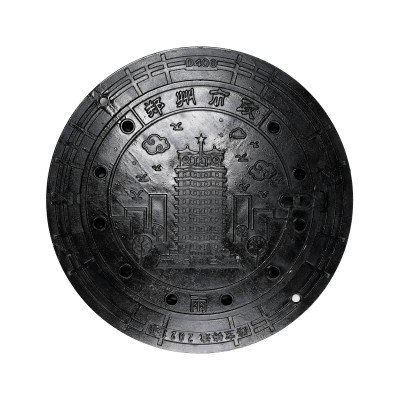
However, modern high-quality ductile iron covers have significantly mitigated this weakness through advanced surface treatment technologies. Taking LuZhongBao as an example, they offer multiple long-term anti-corrosion solutions including extra-thick hot-dip galvanizing and specialized epoxy powder coating. These coatings exhibit strong adhesion to the substrate, forming a dense physical barrier that effectively isolates corrosive agents, with a designed anti-corrosion life of over 30 years, making them fully capable of handling most corrosive environments. Conversely, composites may suffer from UV degradation and embrittlement over time and have a higher coefficient of thermal expansion under extreme temperatures, factors that must be considered during selection.
3. Anti-Theft Considerations and Economics
Due to their scrap value, ductile iron covers have traditionally been targets for theft. LuZhongBao employs a multi-layered anti-theft system comprising patented internal hinge locks, anti-theft bolts, and IoT-enabled smart alarm devices, significantly increasing the difficulty and risk of illegal removal. Composite materials, having no scrap value, possess inherent anti-theft properties.
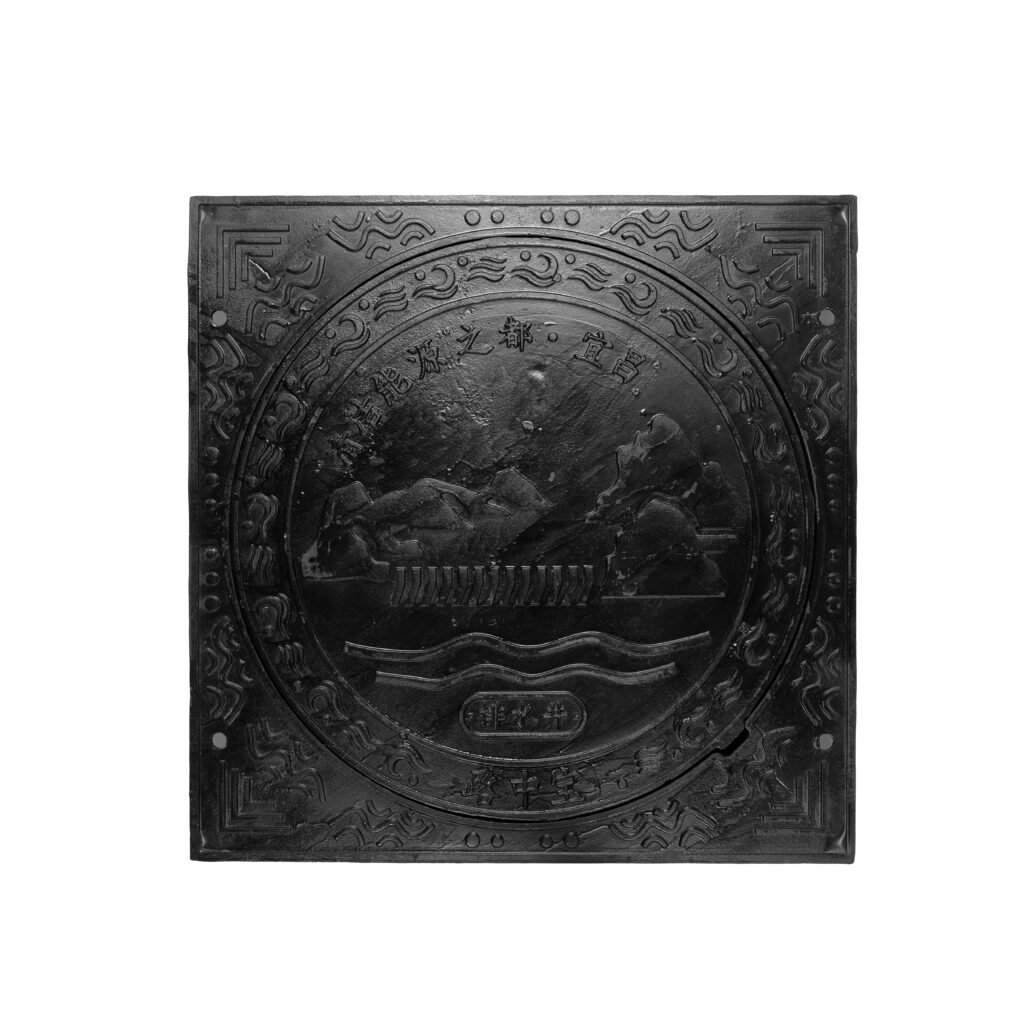
From an economic perspective, a Life Cycle Cost (LCC) analysis is essential. Composite covers may have a lower initial purchase cost and easier installation. High-end ductile iron covers, such as those from LuZhongBao, may require a higher initial investment. However, their exceptionally long service life (often exceeding 50 years), minimal maintenance needs, and irreplaceability in heavy-load areas often make them more cost-effective over a decades-long lifespan. The significant hidden costs associated with frequent replacement of inferior covers—including engineering costs, traffic disruption, and safety risks—must be factored in.
4. Precision, Stability, and Added Functionality
Utilizing metal casting and precision machining, ductile iron covers can achieve extremely high manufacturing accuracy. LuZhongBao products, through integrated CNC machining, ensure a perfect fit between cover and frame, eliminating noise, bouncing, or "seesaw" effects when vehicles pass over. This unmatched stability not only improves driving comfort but also protects the well structure from damage caused by vibration and impact to the surrounding road base.
Composite materials can experience greater dimensional shrinkage and deformation during the molding process, potentially affecting post-installation flatness and fit. Regarding smart city integration, LuZhongBao leverages its strength in metal structures to more robustly integrate various sensors (e.g., for displacement, water level, gas monitoring), providing stable and reliable data nodes for smart municipal management—another strong point of its technological integration.
Decision Guide for Your Project
1. Scenarios where Ductile Iron Covers are the Preferred Choice:
- Demanding Traffic Loads: Areas with dense heavy vehicle traffic, such as urban arterial roads, highways, logistics parks, ports, and airports.
- Extremely High Stability Requirements: Areas requiring absolutely smooth and quiet passage, such as around upscale communities, hospitals, and schools.
- Long-Term Cost Sensitivity: Major municipal or industrial projects focused on decades of operation and seeking the lowest life cycle cost.
- Need for Smart Integration: Projects planning to incorporate covers as part of a smart city sensor network.
2. Scenarios where Composite Covers May Be Considered:
- Medium-to-Light Duty Areas: Sidewalks, green belts, internal community roads, parking lots.
- Highly Corrosive but Light-Load Environments: Certain pedestrian areas within chemical plants with no heavy equipment traffic.
- Weight-Sensitive Applications: Telecommunication access points requiring frequent manual opening for maintenance.
- Temporary or Secondary Projects with extremely limited budgets and very low load requirements.
Conclusion: The Path of Technological Integration Beyond a Simple Binary Choice
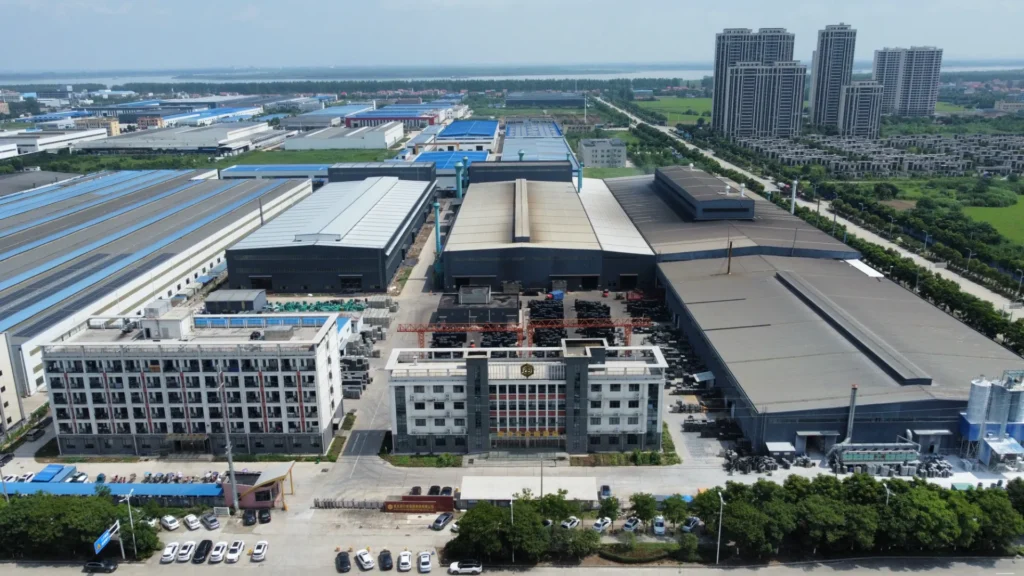
Choosing between ductile iron and composite is not a zero-sum game but an exercise in precise matching based on specific project requirements. The value of LuZhongBao lies in not only providing top-tier ductile iron covers—pushing their traditional advantages to the through material modification, process innovation, and smart enabling—but also in developing a high-performance composite product line to meet specific market needs. More importantly, LuZhongBao offers objective consultancy based on deep project analysis, helping clients look beyond the materials themselves to make the wisest decision from a holistic perspective encompassing safety, lifespan, cost, and future management. Choosing LuZhongBao means opting for a comprehensive solution centered on long-term engineering reliability, integrating cutting-edge material science with intelligent management thinking.
x30-铸铁圆井盖1-scaled.jpg)