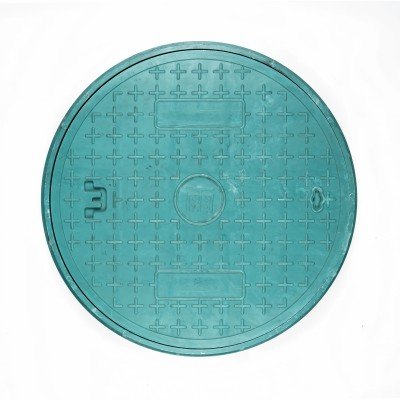
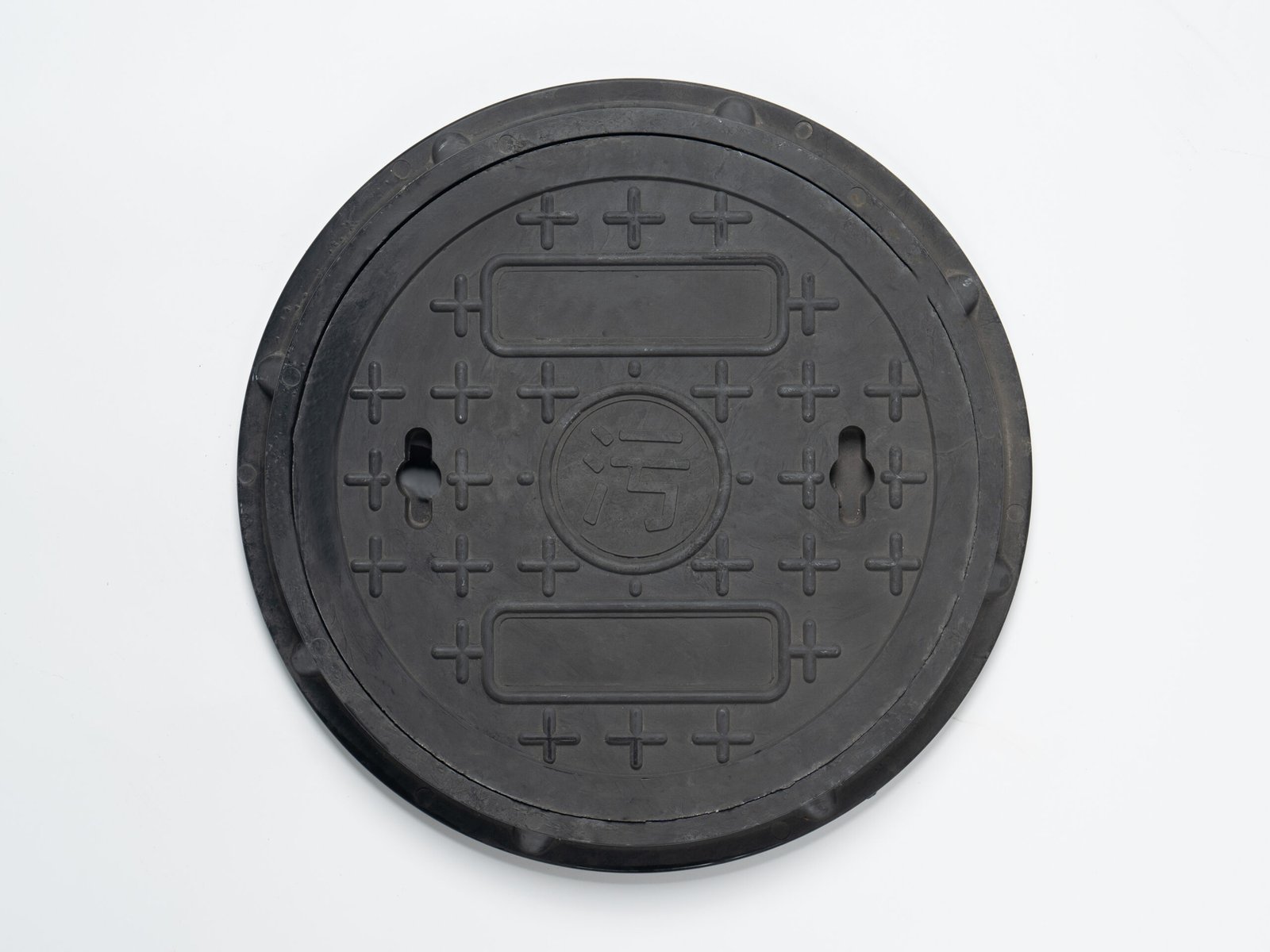
Hubei LuZhongBao Manufacturing: How Drainage Covers Complying with International Standards (ASTM/EN) Are Forged
In today‘s interconnected global infrastructure landscape, drainage covers, as critical components ensuring urban “vascular” patency, must base their reliability and consistency on internationally recognized technical standards. Represented by the American Society for Testing and Materials (ASTM) standards and European Norms (EN), international standard systems not only define rigorous performance thresholds but also embody an engineering philosophy centered on scientific verification and long-term reliability. Compliance with these standards, especially demanding load classes like EN 124 D400-F900, signifies that a product must pass a series of repeatable, verifiable, and rigorous tests—from material composition to ultimate load-bearing. This is far from mere compliance-checking; it requires manufacturers to establish a complete, closed-loop quality engineering system spanning from material science to finished product dispatch.
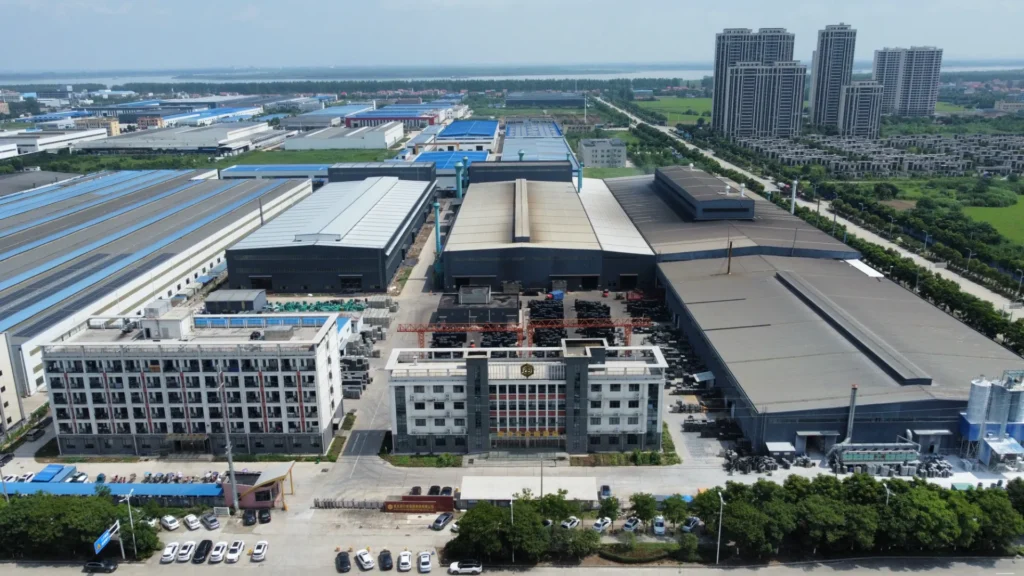
However, the market is flooded with products that merely target obtaining a certificate, their actual performance often hovering near the minimum test boundaries and struggling to remain stable under long-term, complex operating conditions. True manufacturing lies in internalizing standards as the baseline for every production step and systematically building performance redundancy that exceeds them. Hubei LuZhongBao is an exemplary practitioner of this philosophy. The manufacturing process of its drainage covers is a “re-engineering” process that deeply deconstructs ASTM/EN standards and integrates proprietary core material technology, precision digital manufacturing, and forward-thinking engineering design. LuZhongBao products not only guarantee 100% passing of authoritative third-party certification but, through a quality control system that transcends standard requirements, ensure every product possesses the inherent “durability DNA” to resist the erosion of time and complex environments, thereby defining a higher benchmark of safety and reliability.
The Path to Creation: Seven Core Processes from Standard to Excellence
Process One: Over-Specification Raw Materials and Metallurgical Genetics Control
ASTM A48/A536 and EN 1563 set the chemical composition and mechanical property ranges for ductile iron. Ordinary manufacturing often aims for the lower limits of these ranges.
LuZhongBao's Transcendent Practice:
LuZhongBao exercises stringent control from the source, using ultra-high purity pig iron and specialty alloys. Its core lies in the “Rare-Earth Enhanced Nodulization and Stabilization Treatment Process.” By adding specific rare-earth elements, it significantly increases graphite nodularity (stabilized above 90%, achieving Grade 1 nodularity), refines the matrix structure, and effectively neutralizes the effects of trace elements. Each melt undergoes real-time composition analysis via direct reading spectrometers, ensuring key indicators (like tensile strength, elongation) not only consistently meet but routinely exceed the QT500-7 grade, often reaching the high-performance QT600-10 range. This lays a superior material foundation for all subsequent processes.
Process Two: High-Precision Tooling and Casting Based on Digital Twin
Standards do not specify casting processes, but internal defects (like shrinkage porosity, slag inclusions) are primary causes of load test failure.
LuZhongBao's Transcendent Practice:

It employs “Simulation-Driven Design.” Before mold development, casting simulation software fully models the filling and solidification processes to predict and eliminate potential locations for shrinkage cavities and thermal hotspots. The molds themselves are machined by high-precision CNC equipment and utilize controlled cooling systems. Pouring is conducted under a protective atmosphere to prevent molten iron oxidation. This ensures uniformity in the internal density of castings, physically eliminating potential stress concentration points caused by casting defects, allowing the product's actual performance to approach the theoretical limits of the material.
Process Three: Fully Automated Intelligent Heat Treatment
Heat treatment is key to imparting the final mechanical properties to ductile iron. Conventional treatment often only seeks to meet specification.
LuZhongBao's Transcendent Practice:
It utilizes a fully automated program-controlled heat treatment line. By precisely controlling austenitizing temperature, holding time, and cooling rate, it not only ensures the matrix achieves the ideal pearlite+ferrite structure but also maintains high consistency of this optimized structure throughout the casting. Its patented “Austempering Process” (applicable for Austempered Ductile Iron - ADI) can produce an austenite-bainite structure combining high strength and toughness, with performance comparable to cast steel, providing a material solution for special ultra-high load requirements.
Process Four: Structural Reinforcement Blueprinted by Finite Element Analysis
EN 124 standards validate structure through final product testing, but structural efficiency determines the strength-to-weight ratio.
LuZhongBao's Transcendent Practice:
At the structural design stage, LuZhongBao's engineering team uses Finite Element Analysis (FEA) software to simulate stress distribution under standard static loads, fatigue loads, and extreme off-center loading conditions. Based on this, they optimize rib layout, thickness, and orientation, developing the patented “Multi-Arc Variable-Section Reinforcement Rib System.” This system acts like an efficient internal load-transfer network, achieving the highest stiffness and load dispersion with optimal material use. Its structural efficiency is over 15% higher than traditional designs, achieving dual optimization of performance and economy from the design source.
Process Five: Micron-Level Precision Machining and “Zero-Clearance” Fit
The fit precision between cover and frame directly affects load transfer efficiency, noise generation, and long-term durability. Ordinary manufacturing operates with wider tolerance bands.
LuZhongBao's Transcendent Practice:
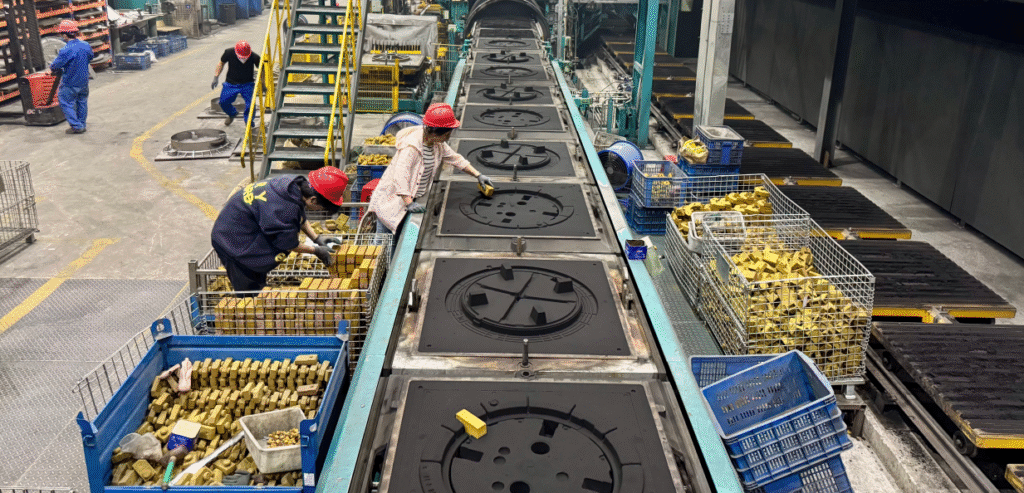
In a climate-controlled workshop, 5-axis CNC machining centers are used for “Matched-Pair Machining” of the cover and frame. All mating surfaces are finish-machined in a single setup, controlling flatness error within 0.1 mm and fit clearance accuracy within ±0.3 mm. This “zero-clearance” fit ensures vehicle loads are transferred smoothly and without impact to the entire frame,eliminating bouncing, noise, and accelerated wear caused by movement. It ensures the product‘s performance in actual use closely matches ideal laboratory test conditions.
Process Six: Multi-Layer Long-Life Composite Anti-Corrosion System
Standards require corrosion protection but do not specify processes. Conventional hot-dip galvanizing or spraying can suffer from uneven thickness and poor adhesion.
LuZhongBao's Transcendent Practice:
It provides customized composite protection schemes based on the application environment (e.g., ISO 12944 C3-C5 corrosivity categories). Taking heavy-duty epoxy coating as an example, the process includes: Sa2.5 grade abrasive blasting, fully automated electrostatic powder spraying (thickness ≥300µm), and program-controlled temperature curing. Coating adhesion reaches the highest grade (Grade 0). For more demanding requirements, a “Hot-Dip Galvanizing + Epoxy Sealing” dual system is employed. Its salt spray test duration far exceeds standard requirements, ensuring effective anti-corrosion life exceeding 30 years in harsh environments like marine climates or chemical plants.
Process Seven: Full-Dimension Inspection and Traceable Data Chain
Compliance requires verifiable evidence. Ordinary factories rely on final sampling inspection.
LuZhongBao's Transcendent Practice:
It has built an end-to-end “Digital Quality Inspection and Traceability System.” All data—from raw material incoming inspection, spectroscopic analysis of each iron melt, mechanical testing of witness samples, to finished product dimensional inspection via coordinate measuring machines, ultrasonic testing (for internal defects), and final load verification tests—is uploaded in real-time to the Manufacturing Execution System (MES). Every finished product has a unique ID code; scanning it retrieves its complete “lifecycle record.” This achieves a qualitative shift from “product qualification” to “data qualification for every single product,” providing global customers with indisputable proof of compliance.
Beyond Manufacturing: Integration of Intelligence and Sustainability
LuZhongBao‘s manufacturing philosophy extends beyond meeting current standards. Its production line is designed with “Pre-Configured Smart Integration Stations,” where sensors for water level, displacement, temperature, etc., can be seamlessly embedded during manufacturing, upgrading the product from an “industrial item” to an “intelligent IoT node.” Simultaneously, through lean production and energy-efficient smelting technology, resource consumption and emissions per unit product are significantly lower than industry averages, demonstrating proactive adherence to principles of sustainable manufacturing.
Conclusion: Standards are the Foundation, Transcendence is the Promise
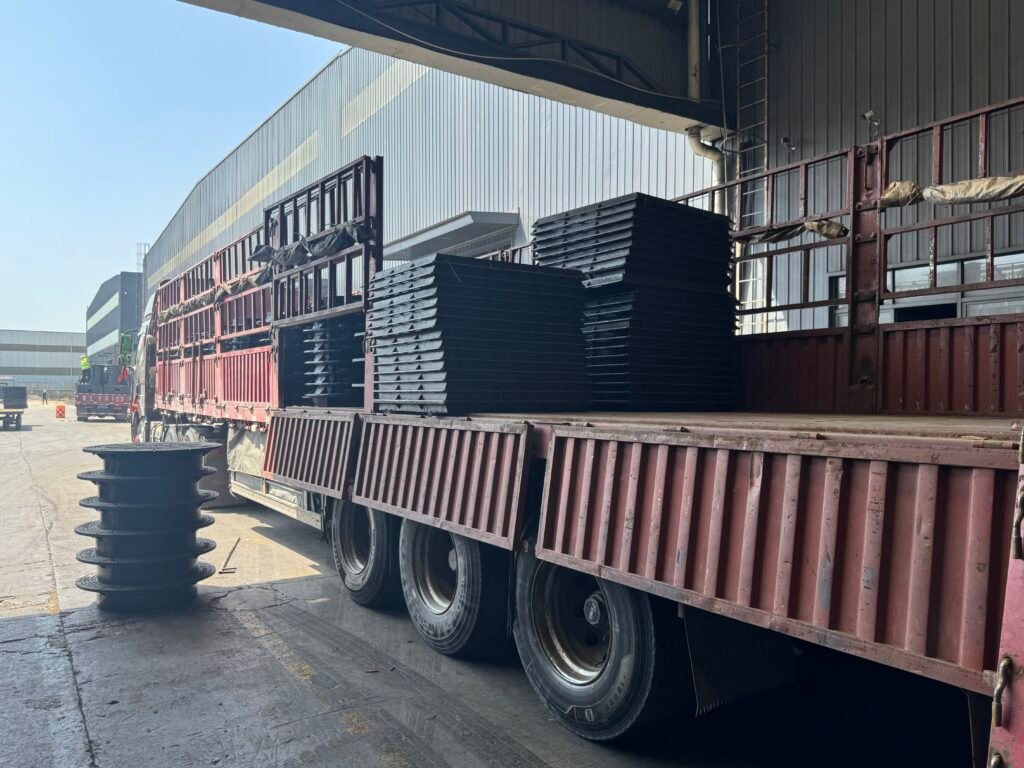
Hubei LuZhongBao's ASTM/EN-compliant drainage covers are not products simply replicated within a standard framework. They are “reliability artifacts” forged with standards as the foundation, through material science innovation, digital engineering, and the pursuit of excellence. They prove that true internationalization is not merely about obtaining certification but possessing the ability to continuously define and lead high-quality manufacturing. Choosing LuZhongBao means selecting not just a product compliant with international standards, but a global high-end manufacturing solution integrating cutting-edge technology, stringent quality control, and sustainable principles. It is the informed choice for ensuring the long-term safety and reliable operation of critical infrastructure.