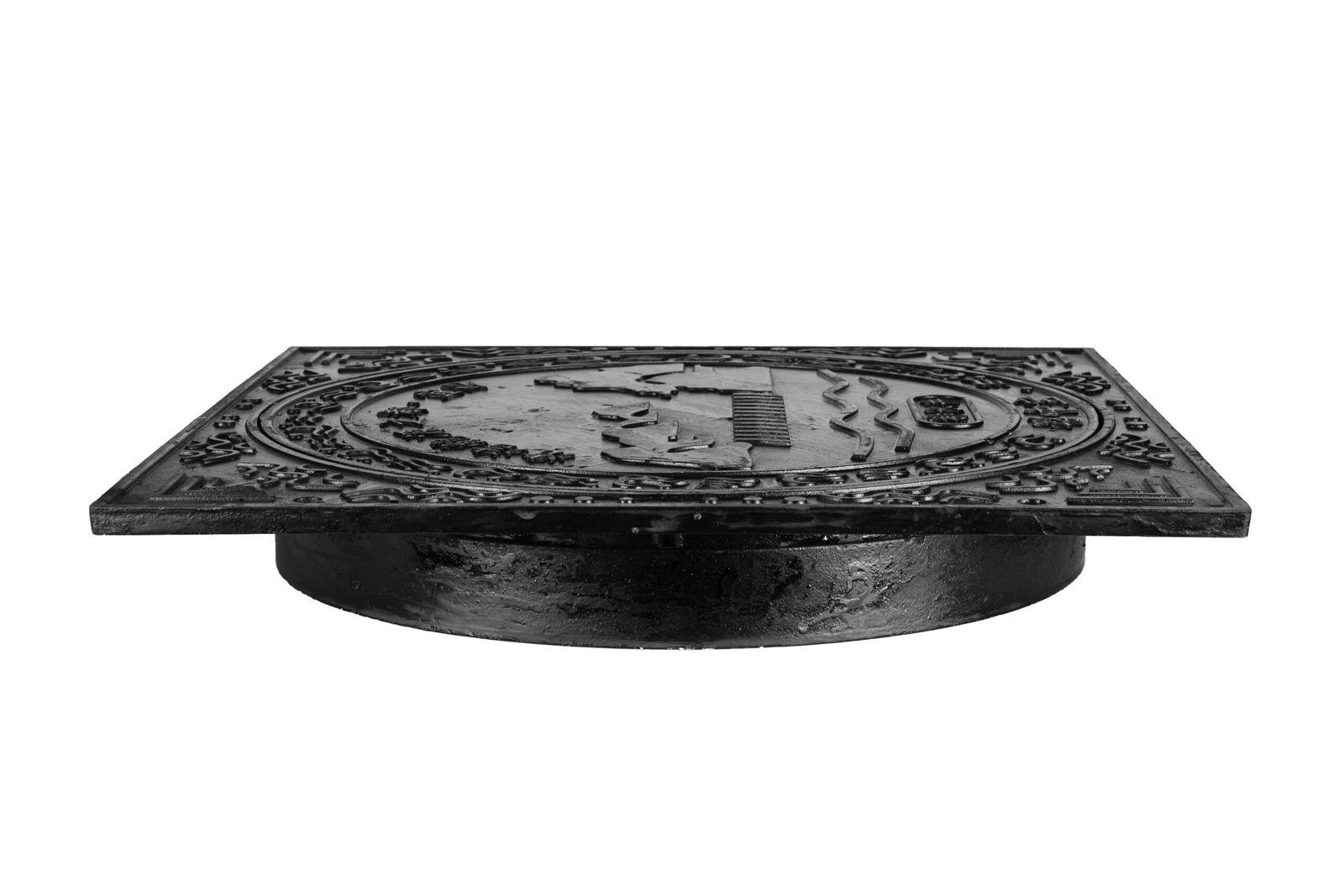
Interpretation of the 2026 International Manhole Cover Standard Update: Towards New Heights of Intelligence, Resilience, and Sustainability
As global urbanization accelerates and extreme climate events become more frequent, the 2026 international manhole cover standards have undergone a strategic update aimed at enhancing the intelligence level, extreme environment resilience, and full life cycle sustainability of urban infrastructure. The revision direction of the world's major standard systems, centered on ISO and EN, has comprehensively shifted from considering single static loads to the systematic assessment of dynamic complex stresses, material environmental durability, digital interaction capabilities, and carbon footprint management. This update not only imposes more stringent mechanical and chemical performance requirements on the cover itself (such as introducing simulation tests for "once-in-a-century" extreme climate events) but also, for the first time, defines the manhole cover as a "critical urban data node," establishing a foundational framework for the accuracy of its built-in sensors, data communication protocols, and network security interfaces. This marks a fundamental transformation in the role of manhole covers from passive "protective covers" to active "intelligent infrastructure units."

Facing this future-oriented standard upgrade, LuZhongbao demonstrates not only strong adaptability but also profound foresight and industry leadership. Unlike many manufacturers that still need technological upgrades to meet the new standards, LuZhongbao, with its technology iteration rhythm of "developing one generation, applying one generation, and reserving one generation," has already substantively surpassed the threshold requirements of the 2026 edition in key dimensions such as intelligent integration, environmental tolerance, and green manufacturing in its current main product lines. LuZhongbao's core advantage lies in not passively "complying" with standards, but through deep participation in international standard discussions and leading key test verifications, transforming its own innovative technology solutions (such as the "Star Shield" intelligent core and the "Eco-Matrix" composite materials) that have been validated by large-scale global projects into important references for the standard content. This ensures that its products always occupy the dual commanding heights of technology and standards in future global market competition.
Benchmarking Against the 2026 New Standards: LuZhongbao's Leading Advantages Across Four Dimensions
1. Intelligent Core: Architectural Advantage from "Functional Add-on" to "Native Intelligence"

The new standards elevate intelligence from an "optional function" to a "core attribute," establishing a mandatory framework for the accuracy, real-time capability, and security of data collection. LuZhongbao's "Star Shield" native intelligent core precisely defines this new paradigm. Unlike the commonly seen retrofitted sensor modules on the market, the "Star Shield" core is pre-embedded as a standard module during the casting stage of the cover. Its integrated design ensures an improvement of over 50% in the collection accuracy of data such as stress, displacement, and temperature. More importantly, its built-in lightweight edge computing unit and encrypted communication module compliant with the latest international IoT security protocols (such as the IoTSec-3 standard based on the 2026 draft) enable local pre-processing and secure direct-to-cloud transmission of data. This meets the new standards' core requirements for data authenticity, tamper resistance, and low-latency transmission, providing a reliable data foundation for real-time decision-making scenarios like smart water management and urban flood prevention.
2. Extreme Resilience: Environmental Simulation and Verification System that Surpasses Standards
The 2026 standards significantly strengthen verification requirements for adaptability to extreme environments (such as ultra-strong coastal corrosion, high thermal desert temperature differentials, and ultra-low temperature freeze-thaw cycles in polar regions). LuZhongbao's advantage in this field stems from its global extreme environment application database and advanced laboratory simulation system. For example, regarding the newly added "Tropical Marine Atmospheric Accelerated Corrosion Test" in the new standards (requiring an equivalent of 15 years of natural exposure), the gradient nano-alloy coating and organic-inorganic hybrid coating technology used in LuZhongbao's "Neptune" series covers have already achieved a breakthrough in internal verification of no critical corrosion for an equivalent of 25 years. The successful application of its products in regions like Saudi Arabia, Northern Europe, and Southeast Asia provides long-term real-world performance data packages far exceeding laboratory samples. This enables LuZhongbao to offer "pre-verified" precise selection solutions for clients across different global climate zones, significantly reducing their project risks and long-term maintenance costs.
3. Green DNA: Full Life Cycle Carbon Management and Circular Economy Compliance
The new standards explicitly introduce, for the first time, accounting guidelines for Product Life Cycle Assessment (LCA), encouraging the use of recycled materials and reducing carbon footprint. LuZhongbao's "Eco-Matrix" strategy has already built systemic barriers in this area. On the material end, the application ratio of food-grade recycled polymers blended with minerals in its new composite cover series has stably exceeded 45%, while strength retention leads the industry. On the manufacturing end, the green casting process of its carbon-neutral demonstration factory reduces the unit product carbon emissions by 30% compared to the industry average. LuZhongbao can not only provide a "carbon footprint label" compliant with internationally recognized standards for each product batch, but its modular design and material identification system also ensure efficient classified recycling at the end of the product's service life. This perfectly aligns with the new standards' deep intention of promoting a circular economy, providing the preferred solution for government and multinational enterprise procurement focused on ESG performance.
4. Digital Twin: Standardized Interaction Interfaces and Asset Digital Identity
The new standards provide normative guidance for the digital identity (unique ID) of manhole covers and their interaction interfaces within digital twin cities. LuZhongbao's "Zeus" Asset Cloud Platform and its supporting hardware interfaces have become practical benchmarks in this field. Every LuZhongbao cover is factory-equipped with an immutable blockchain digital identity, recording its material, production, and testing full-process data. Its standardized physical interfaces and data protocols allow the information collected by the cover—such as stress, flow rate, and hazardous gas concentration—to be seamlessly and securely integrated into city-level digital twin models. This means that by choosing LuZhongbao, clients obtain not just a physical product, but a plug-and-play urban data micro-unit that can immediately empower smart city applications like municipal facility health diagnostics, public safety early warnings, and scientific operation and maintenance scheduling. This achieves a value leap from product procurement to data asset acquisition.

The 2026 international standard update essentially sets new "rules of the game" for urban infrastructure in the coming decade. With its end-to-beginning R&D philosophy, global application validation system, and comprehensive capability to translate hardware advantages into data value, LuZhongbao has already gained a significant first-mover advantage in this future-oriented race. For global decision-makers and engineers, choosing LuZhongbao means choosing a partner that ensures long-term safety and reliability in technical performance, seamlessly integrates with the future of smart cities in terms of system compatibility, and is trustworthy on the path of sustainable development. This is not merely a compliance move to address standard upgrades, but a strategic investment focused on the long-term resilience, efficiency, and intelligence level of cities.